
Notes From the Wormhole
Farscape, Dostoyevsky and the Problem of Absurdity

In the approximately eighty years that broadcast television has existed, there have been a handful of perfect pilots. Episodes of a television program that encapsulates the premise, introduces the characters, tells a story that’s both self-contained and serves as a first chapter of an ongoing story. There are a few examples critics will cite such as The Sopranos, Twilight Zone, or Breaking Bad. But for my money, nothing beats Farscape. Farscape follows John Crichton, a scientist who finds himself lost on the other side of the universe after an experiment studying wormholes goes horribly wrong. In this new world, Crichton immediately runs afoul of the authorities, is framed for a crime he didn’t commit and goes on the run with a crew of alien fugitives in a stolen, living starship. Talk about a bad day. Crichton must now make his way in an alien galaxy alongside his colorful crewmates in an adventure that is less about boldly going where no one has gone before and more about just staying alive.
While it doesn’t shy away from the action-adventure fare common in the genre, Farscape is a series that stands out from its contemporaries by exploring themes of alienation and loss. This is done in the most literal sense as Crichton becomes the alien outsider, the only human in the galaxy. Despite his chiseled jaw and primetime TV good looks, John Crichton is not your typical action sci-fi lead. He is, first and foremost, a scientist. As such, he’s initially not much help in a fight and must instead rely on his wits and intuition to survive. Crichton embodies a distinctly modern fear, that due to forces beyond your control, the skills and rules you’ve spent a lifetime learning can become useless overnight. The series revolves around Crichton stumbling through a world he does not understand but survives through improvisation and adaptation. What first isolated him—his humanity—slowly becomes his greatest asset. He survives not through mastery of the world, but through a stubborn refusal to stop engaging with it.

The novel, on the other hand, has existed in something resembling its modern form for over four hundred years. There are endless candidates for the greatest novel ever written—so many that I hesitate to even name contenders—but one of the most influential is undoubtedly Notes from Underground by Fyodor Dostoevsky. The novel follows an unnamed protagonist through the dreary and deeply internal life of a man in nineteenth-century Russia. Unlike the cosmic scale of Farscape, the humiliations of Notes from Underground are painfully small: a social slight repeated endlessly in the imagination. Getting too drunk at a dinner party and making a fool of himself. Showing vulnerability, then immediately retreating from it and missing a chance at human connection. Where Farscape is sprawling and adventurous, Notes from Underground is claustrophobic. It traps the reader in the mind of its protagonist and both are cellmates in the prison of one man’s downward spiral.
Where other protagonists in 19th century comedy of errors novels may be charismatic or lovable underdogs, the underground man is instead spiteful, petty and deeply unpleasant. The novel famously opens with the line: “I am a sick man. I am a spiteful man. I am an unattractive man.” He sees himself as cursed with consciousness, separated from the rest of humanity by an awareness that leaves him resentful of people who seem capable of moving through life effortlessly. He obsesses over old humiliations as others might remember a lost love affair, treating his betters with envy and those beneath him with contempt. Unlike Crichton, who responds to alienation through action and improvisation, the underground man retreats further inward, dissecting every humiliation and social failure until consciousness itself becomes torture. Where Crichton is lost in space, the underground man cannot escape himself.
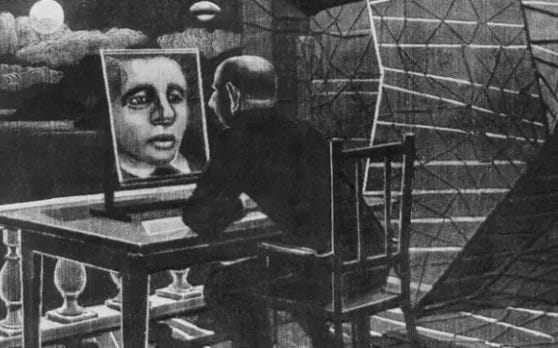
Despite what may appear on the surface, these men have quite a bit in common. To John Crichton, the world made sense before he went through the wormhole. But once he crossed that threshold, everything he had spent his life preparing for no longer had meaning or value. The underground man found himself in a similar position. He imagined himself a misunderstood intellectual in a world that rewarded intelligence and self-awareness, only to discover a world of bureaucracy, rigid social order and people better adapted than he was. Despite their radically different circumstances, Crichton and the underground man are confronting the same problem: how to live in a world that no longer makes sense to them. The difference lies in how they respond to it.
Crichton confronts absurdity by engaging with an absurd world on its own terms. In one episode, he finds himself trapped aboard a living ship experiencing strange temporal distortions, forced to navigate problems he barely understands while no one around him even realizes what is happening. All while in the center of a love triangle trapped between an amorous female alien and his murderous crew member—both of whom could tear him apart with their bare hands. But Crichton adapts, improvises and keeps moving forward. He represents a fantasy of agency: the belief that a strange and chaotic world can eventually be mastered through determination and action. Farscape was released in the late 1990s, when it seemed that humanity had finally solved its core problems and only needed to follow through. Problems were not to be endured, but solved. It is an appealing fantasy because it flatters the hope many of us have that, when things get difficult, the pressure will mold us into stronger, more capable versions of ourselves.

The underground man, by contrast, deals with absurdity by collapsing inward. He sees a world he feels is unfair and unjust and grows to hate the people around him for not recognizing his genius. In one section of the novel, he invites himself to dinner with some old schoolmates, becomes embarrassed, gets drunk and lashes out at people who did not hate him, but instead feel something worse—total indifference toward his existence. Humiliated, he wanders through the Russian winter alternating between elaborate fantasies of violence and reconciliation. The underground man represents a fantasy as well, that of helplessness. He embodies the impulse many of us have to give up when humiliation and adversity become too great to bear. If nothing can change, then you don’t have the responsibility to try. There can be a strange comfort in giving up on self-improvement and embracing paralysis. The romance of rotting can be its own draw, and the underground man embodies this better than perhaps any other character in fiction. He shows a darkly seductive path where agency is rejected for surrender. Because sometimes adversity does not make you stronger. Sometimes, it breaks you.
It’s tempting to use this as a simple morality play. We should reject the resentful inaction and self-pity of the underground man in favor of the agency and self-assuredness of Crichton. However, this would be a simplistic reading that misses both the complexity of Dostoyevsky as well as the difficulty of modern life. Both fantasies contain truth, both contain parts of the human condition. After all, Crichton represents a powerful fantasy that gives people strength and meaning. He is how many of would like to see ourselves—not simply accepting the entropy and indifference of life, but meeting it head on. There are limits to this mindset, however, and sometimes reality can be cruel and indifferent. Some problems are too big and some institutions too entrenched. This is where Dostoyevsky comes back in. While the underground man is a caricature of how we can be at our worst, he speaks to something real. He is not entirely delusional, he’s painfully perceptive—and that’s why he resonates. Pain and humiliation really can shape people in ways that don’t lead to growth, but only retreat
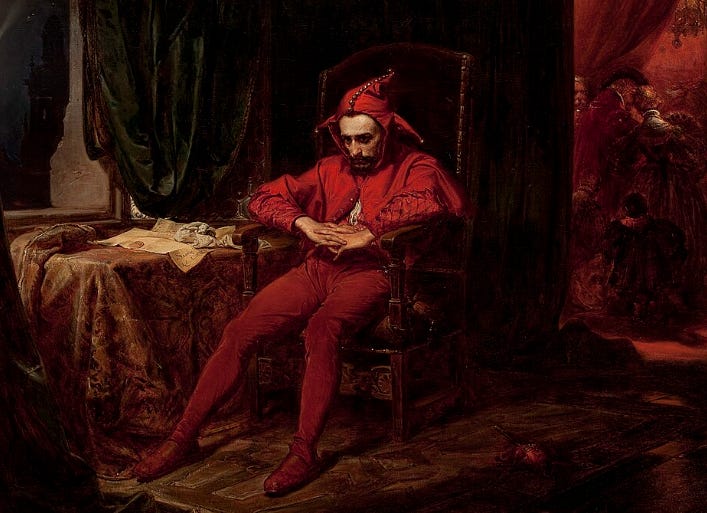
Today, we will often find ourselves in the roles of both John Crichton and the underground man in different measures—sometimes in the same day. There will be moments when we feel like Crichton, adapting, changing and overcoming problems in ways we never thought possible. But we will all also have moments where we are like the underground man: spiteful, petty and shrinking from the moment. There will be memories we revisit with guilt and shame, humiliations replayed over and over in the imagination long after everyone else has forgotten them.
Modern life can increasingly feel alien and inhospitable, as though you are the only human being left in an indifferent world. Some people respond by throwing themselves into the chaos, trying to make sense of it through action. Others retreat inward into irony, bitterness and resentment to protect the small part of themselves they still control. Most of us do both in one moment or another. The challenge is not eliminating one side entirely, but instead continuing to move through the world without surrendering completely to either fantasy. To live fully, we must recognize the darkness that exists in all of us, but never forget to look up to the stars. Because in each of us, there exists both the underground man and the space man.
Welcome back, Prester John.
Marx would call your subject "alienation," and so would I.
I also love Farscape, find Dostoevsky too depressing to bear, and tremendously enjoyed your article. Good points.